
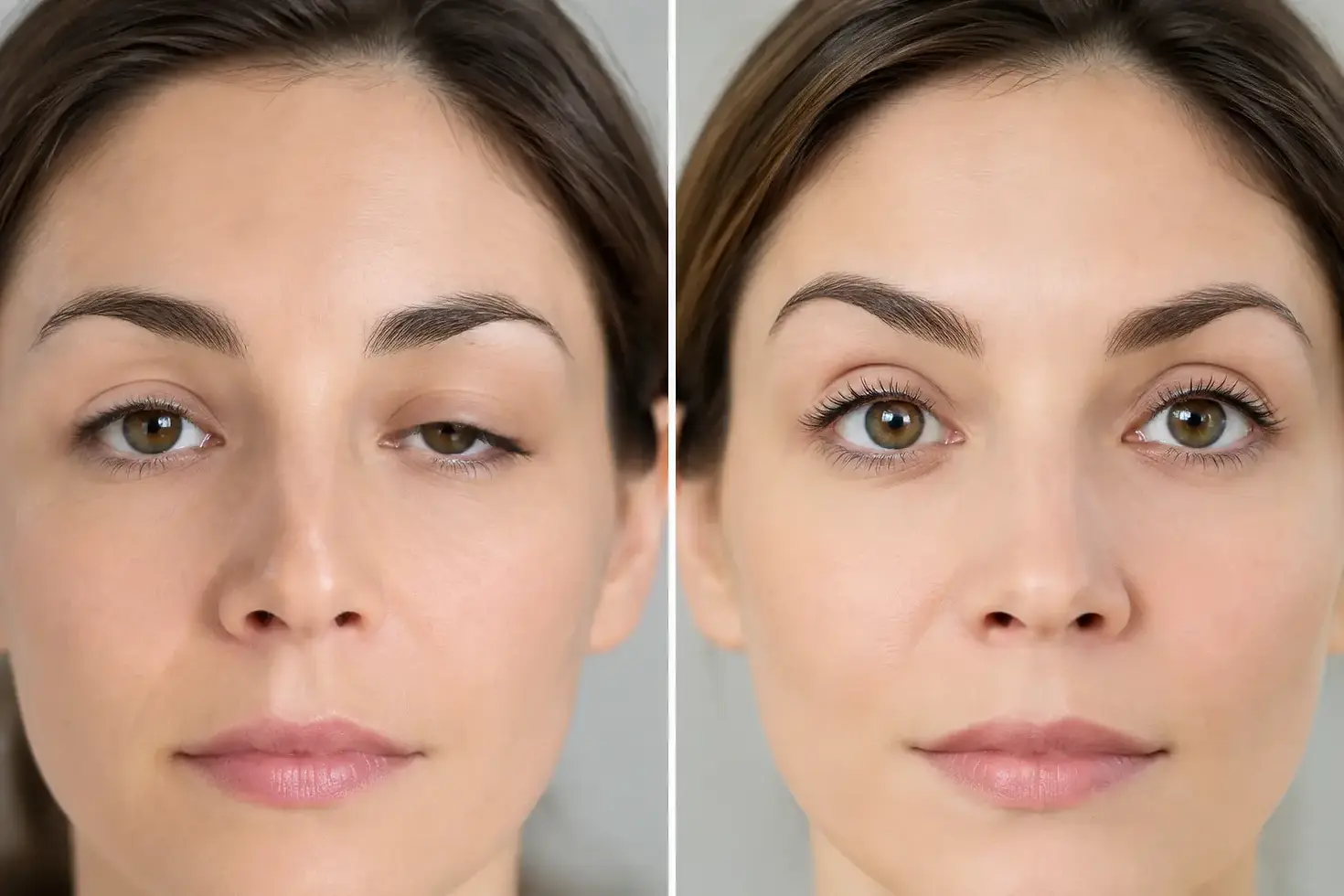
Ptosis Correction Versus Browpexy Compared
A heavy upper eyelid is not always an eyelid problem. Sometimes the eyelid margin has fallen over the pupil. Sometimes the brow has descended and is pushing skin downward. In many patients, both changes are present. Understanding ptosis correction versus browpexy starts with identifying the structure creating the heaviness, rather than choosing a procedure based on appearance alone.
That distinction matters for comfort, vision, facial balance, and a result that still looks like you. Surgery around the eyes requires a precise understanding of how the brow, eyelid skin, eyelid margin, and eye-opening muscles work together.
Ptosis Correction Versus Browpexy: The Core Difference
Ptosis correction repairs a drooping upper eyelid margin. The goal is to raise the lid itself when it sits too low over the eye, potentially blocking the pupil or making the eyes appear uneven, tired, or partially closed.
A browpexy supports or elevates a low eyebrow. It is often performed through an upper eyelid incision, sometimes alongside upper blepharoplasty. Its purpose is to address brow descent that contributes to hooding or crowding above the eyes.
The procedures can create a similar early impression - a more open, rested eye area - but they address different anatomy. A browpexy cannot reliably correct a true low eyelid margin. Likewise, lifting a ptotic eyelid does not necessarily correct the downward pressure from a descended brow.
When the Eyelid Margin Is the Problem
Ptosis occurs when the upper eyelid margin sits lower than it should. In some people, this is a long-standing feature. More commonly, it develops over time as the tendon that lifts the eyelid stretches or weakens. It can also occur after prior eye surgery, contact lens wear, trauma, certain neurologic conditions, or as part of a congenital eyelid difference.
Patients may notice that one eye looks smaller in photographs, that they raise their forehead to see more comfortably, or that reading and driving feel more difficult because the upper visual field is restricted. Others describe persistent forehead fatigue by the end of the day. Cosmetic concerns and functional symptoms often overlap.
Ptosis correction is customized to the eyelid's measurements, levator muscle function, symmetry, and eye surface health. Depending on the cause and anatomy, surgery may involve tightening or advancing the levator mechanism through a carefully placed eyelid crease incision. In selected cases, an internal approach may be appropriate.
The aim is not to make the eyes look wide or startled. It is to restore a comfortable, balanced eyelid position while preserving natural expression. Because healing and muscle response can vary between sides, eyelid symmetry is assessed thoughtfully before surgery and monitored during recovery.
When a Low Brow Creates Hooding
The brow is part of the upper eyelid complex. As it descends with age, genetics, skin quality changes, or facial anatomy, it can press tissue toward the lash line and create the appearance of excess upper eyelid skin. Some patients compensate by lifting their brows throughout the day, producing deep forehead lines and a strained expression.
A browpexy is a conservative method of securing the brow in a higher, more stable position. It is generally best for mild to moderate brow descent, especially when upper eyelid surgery is already planned. Through the upper eyelid incision, the surgeon anchors brow tissues to provide support without creating a separate visible forehead scar.
This approach is not designed to produce the more dramatic elevation possible with a formal brow lift. For patients with significant brow descent, marked forehead laxity, or a need for broader reshaping of the brow, a different brow-lifting technique may be a better fit. The right plan depends on the position and shape of the brow, not simply on the amount of hooding present.
Why Upper Blepharoplasty Is Sometimes Part of the Plan
Excess upper eyelid skin can coexist with ptosis, brow descent, or both. Upper blepharoplasty removes or repositions carefully selected skin and, when appropriate, fat. It can reduce hooding, but it does not repair a weak eyelid-opening muscle or meaningfully lift a low brow on its own.
This is why removing too much skin without evaluating the brow and lid margin can lead to an unsatisfying result. The eyes may still feel heavy, or they may look overly hollow or tight. In patients who unconsciously use the forehead to elevate the brows, removing skin can also reveal a brow position that was previously masked by compensation.
A careful evaluation may lead to one procedure or a combination such as ptosis repair with upper blepharoplasty, browpexy with blepharoplasty, or ptosis repair and brow support together. Combining procedures is not automatically better. It is appropriate only when each part of the plan addresses a documented anatomical concern.
How an Eyelid Specialist Determines the Right Procedure
A consultation should involve more than looking at the amount of upper eyelid skin. The examination begins with the position of the eyelid margin relative to the pupil, the strength of the eyelid elevator muscle, brow height and shape, forehead activity, skin redundancy, and differences between the two sides.
The surgeon may gently elevate the brow to see how much hooding resolves. They also assess whether lifting the eyelid margin changes the eye's appearance and visual clearance. Photographs, formal visual field testing, and measurements can help document functional obstruction when it is present.
Eye health is equally relevant. Dry eye symptoms, prior LASIK or cataract surgery, contact lens use, thyroid eye disease, facial nerve weakness, and previous eyelid procedures can affect surgical planning. For a procedure this close to the eye, an ophthalmic examination and oculoplastic expertise add meaningful safeguards.
At Denver Eyelid Specialists, treatment planning is centered on the relationship between function, anatomy, and natural facial character. The goal is not to impose a single brow height or eyelid shape. It is to create a refined correction that respects the patient's individual expression.
Recovery and Results: What to Expect
Ptosis repair and browpexy are usually outpatient procedures. Early swelling, bruising, tightness, and mild asymmetry are expected while tissues settle. Most patients look presentable for public activities in roughly one to two weeks, although residual swelling can take longer to fully resolve.
With ptosis correction, the eyelid height may continue to refine over several weeks. Temporary dryness, light sensitivity, or a sensation of incomplete closure can occur, particularly while swelling is present. Lubrication and postoperative instructions are tailored to the patient's eye surface and procedure.
With browpexy, patients may notice temporary forehead or brow tightness. The final degree of brow support becomes clearer as swelling improves. Browpexy provides support, but aging continues, and no procedure can permanently stop normal tissue relaxation.
As with any eyelid surgery, potential risks include asymmetry, undercorrection or overcorrection, dry eye symptoms, scarring, bleeding, infection, and the need for revision. These concerns are uncommon but deserve direct discussion. A conservative surgical plan, precise measurements, and close follow-up help protect both appearance and eyelid function.
Functional Coverage and Cosmetic Considerations
When ptosis obstructs the visual field and meets insurer-specific documentation requirements, ptosis repair may qualify for insurance coverage. Measurements, photographs, and visual field testing are often needed. Coverage is determined by the diagnosis, degree of impairment, and the individual insurance plan.
Browpexy and upper blepharoplasty may also be considered functional in certain circumstances, but many cases are cosmetic. It is best to separate the medical and aesthetic portions of a treatment plan clearly before scheduling surgery. Patients should receive a straightforward explanation of what is medically indicated, what is elective, and what fees may apply.
The most helpful next step is a detailed eyelid evaluation, especially if you find yourself lifting your forehead, tilting your head back to see, or wondering why upper eyelid surgery alone may not solve the problem. A precise diagnosis gives you the best chance of clearer vision, balanced features, and a refreshed result that never looks overdone.


Comments