Board-Certified · Fellowship-Trained Oculoplastic Surgeon
Text or Call (720) 386-1989


YOUR GUIDE TO EYELID SURGERY
Blepharoplasty in Denver
Natural-looking cosmetic and functional eyelid surgery from Chris Thiagarajah, MD—a board-certified, fellowship-trained oculoplastic surgeon focused on the delicate anatomy around your eyes.
Chris Thiagarajah, MD · Board-certified ophthalmologist
ASOPRS fellowship-trained oculoplastic surgeon
12,000+
Eyelid procedures performed
ASOPRS
Fellowship-trained specialist
Board-Certified
American Board of Ophthalmology
Denver / DTC
Care in Greenwood Village
10x Top Doctor
Denver 5280, 2017–2026
7–10 Days
Typical initial recovery
REAL PATIENT RESULTS
Upper & Lower Blepharoplasty

UNDERSTANDING BLEPHAROPLASTY
What Is Blepharoplasty?
Blepharoplasty is eyelid surgery. Upper blepharoplasty, also called an upper eyelid lift, removes extra skin (and sometimes a small amount of fat) from the upper eyelids to soften a heavy, hooded look. Lower blepharoplasty treats under-eye bags and puffiness by removing or repositioning lower eyelid fat while protecting lower eyelid support.
The right approach starts with identifying the cause. Excess skin, a low eyelid edge and a descended brow can look similar, but they may need different treatments: blepharoplasty for extra skin, ptosis repair for a low eyelid edge, and a brow lift when a drooping brow pushes skin onto the lid. Preserving eye comfort, eyelid function and your natural expression matters as much as appearance. When skin hangs over the lashes, upper blepharoplasty can also open up your upper field of vision. Many upper eyelid lifts are done in the office under local anesthesia; others are done with sedation in a surgery center. Your consultation confirms which approach fits you. Blepharoplasty may not correct all dark circles, wrinkles or causes of a tired appearance. Fine lines and wrinkles around the eyes may respond better to UltraClear laser resurfacing, alone or with eyelid surgery. Puffiness that comes and goes is often related to fluid or allergies, and surgery is not the first step for swelling that fluctuates.
Extra upper-lid skin
Usually treated with blepharoplasty
Low upper eyelid edge
Usually treated with ptosis repair
Low or heavy brow
Usually treated with a brow lift
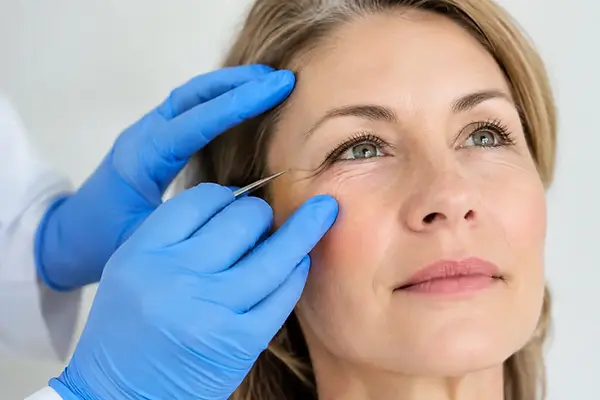
Dr. Thiagarajah also performs ptosis repair, brow lifts and revision surgery. See Eyelid Surgery in Denver.
Watch: Upper Eyelid Blepharoplasty in Denver

EXPLORE YOUR OPTIONS
Upper vs. Lower vs. In-Office Blepharoplasty
Upper blepharoplasty treats heavy, hooded upper lids, lower blepharoplasty treats under-eye bags, and the two can be combined in one surgery. In-office blepharoplasty is an upper eyelid lift done awake under local anesthesia. A consultation helps determine whether upper, lower or combined surgery fits your anatomy.
Upper blepharoplasty. Dr. Thiagarajah marks the crease with you sitting up, matched on both sides, and measures the skin with a gentle pinch test. He removes skin and sculpts fat only if needed, because too much fat removal looks hollow and older. Fine sutures are hidden in the natural crease. "I'm conservative with skin," he says. "More can be taken later, but too much is hard to undo." The surgery takes about 45 minutes. Lower blepharoplasty. Lower eyelid surgery addresses the fat pads, skin, eyelid support and the transition from eyelid to cheek. It is often done from the inside of the lower eyelid (transconjunctival), which leaves no external scar, sometimes with a small skin pinch. Whenever possible, fat is repositioned to fill the tear trough, and only what is necessary is removed to avoid hollowing. If the lid is lax, gentle support helps maintain a natural eye shape. Lower blepharoplasty takes about an hour. Upper and lower together. Combining upper and lower blepharoplasty takes roughly an hour and a half. In-office blepharoplasty. For the right patient, an upper eyelid lift can be done right in the office under local anesthesia, with no general anesthesia and no surgery-center visit. You stay awake and comfortable, and you go home the same day. The procedure takes about 30 minutes. Some patients take a valium beforehand to relax. Your health and your surgical plan decide whether the office or the operating room is the better fit.
Upper blepharoplasty
Heavy, hooded upper lids · About 45 minutes
In-office upper blepharoplasty
Done awake under local anesthesia · About 30 minutes
Lower blepharoplasty
Under-eye bags and puffiness · About 1 hour
Upper and lower together
Both eyelids in one surgery · About 1.5 hours


Lower blepharoplasty
Treatment of under-eye bags through an individualized plan for fat removal or repositioning, skin and eyelid support. The technique depends on the lid and cheek anatomy.
LOWER EYELIDS

Sometimes the concern goes beyond extra skin.

Drooping eyelid edge?
Consider ptosis evaluation.
Ptosis repair addresses the eyelid edge, not extra skin. For children, see pediatric ptosis surgery.


BEFORE & AFTER
Blepharoplasty Before and After Photos
Explore upper, lower and combined eyelid procedures. Read about blepharoplasty results and one patient's story.
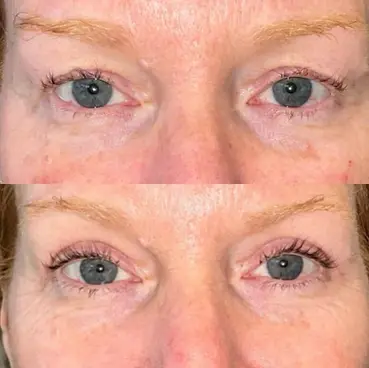
Upper blepharoplasty
Before above · after below
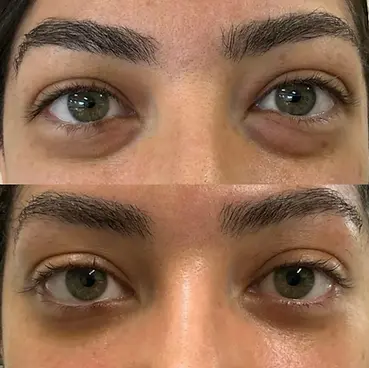
Lower blepharoplasty
Before above · after below
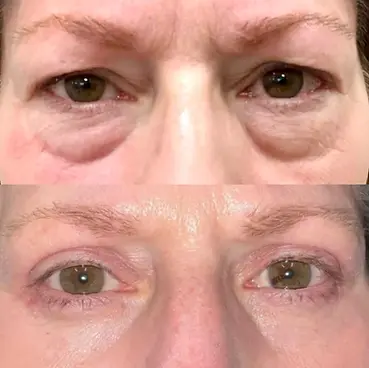
Upper & lower blepharoplasty
Before above · after below
YOUR QUESTIONS TO A CLEAR PLAN
Your Blepharoplasty Care Journey
01
Evaluate & understand
Discuss your goals and medical history. Dr. Thiagarajah evaluates your eyelids, brows and eye health, and explains which concerns surgery may address.
02
Personalize the approach
Review the proposed procedure, setting, anesthesia, fees, risks and alternatives. Upper-lid incisions generally follow the crease; lower-lid approaches vary. See preparing for blepharoplasty and what to expect on the day of surgery.
03
Recover with guidance
Receive instructions for care at home and follow-up appointments. Arrange a ride home and support as advised, and plan time away from strenuous activity.
Your Blepharoplasty Consultation
Your consultation is a one-on-one evaluation of why your eyes look heavy, tired, droopy or puffy. You do not need to know which procedure you need. You leave with a clear plan, expected recovery and fees, without pressure to schedule surgery.
What we evaluate
Lid height, brow position, muscle function, skin and bags
What to bring
Medication list, past eye surgery and older photos
Cosmetic or vision concern?
Vision concerns may use insurance; cosmetic is self-pay
For cosmetic eyelid surgery, no referral is needed. For surgery through insurance, some plans require a referral from your primary care doctor. If your visit is billed to insurance, your cost depends on your deductible and copay. After your treatment plan is set, you receive a detailed quote based on the procedures recommended for you. Virtual consultations are also available.
A THOUGHTFUL STARTING POINT
Who Is a Good Candidate for Blepharoplasty?
Dr. Thiagarajah recommends surgery only when three things are true: you have a specific concern you can see yourself, surgery can actually fix it, and your expectations for the result and healing are realistic. Good candidates are healthy adults with a stable eye surface. Anatomy, rather than age alone, determines the treatment options.
At your exam, your eyelids, brows, muscle function, eye position and natural asymmetries are evaluated together. What appears to be excess upper-eyelid skin may also involve ptosis, eyebrow position, eyelid-muscle function or natural differences between the two eyes. Under-eye fullness may need a different approach from loose skin or hollowing. Your eye surface matters too. Your tear film is screened and optimized before surgery, and any history of problems with blinking or eyelid closure matters. If you have dry eyes, previous LASIK, autoimmune disease or wear contact lenses regularly, tell your surgeon before surgery so your treatment plan can be adjusted. If you have filler under the eyes, dissolving it before lower eyelid surgery is recommended for the best outcome, because existing filler causes more swelling after eyelid surgery. Men and women are planned differently, to respect your existing eyelid shape, crease and facial character. The goal is "more awake, same me."
A concern surgery can address
Anatomy, rather than age alone, determines the treatment options.
Realistic Goals for your results
You want to look refreshed while preserving your natural eye shape..
A careful review of your eye health
Your consultation includes a review of dry eye, medications and previous treatments.
Time to recover comfortably
You can plan for healing, follow-up visits and a temporary pause in strenuous activity.
Can laser treatment fix droopy or hooded eyelids?
Laser skin resurfacing, such as UltraClear, can improve skin texture, fine lines and overall skin quality around the eyes. It does not give strong long-term results for loose eyelid skin or puffy fat, which usually need blepharoplasty. Lasers are often used alongside eyelid surgery, either before, during or after, to refine the skin.
Watch: What Happens During an Eyelid Surgery Consultation

Blepharoplasty Surgery Day: What to Expect
You go home the same day. Arrange a driver, because you will not be able to drive yourself home.
Upper eyelids
About 45 minutes
In-office upper eyelids
About 30 minutes, local numbing
Lower eyelids
About 1 hour
Upper and lower together
About 1.5 hours
In the office (local anesthesia). You arrive about 30 to 45 minutes early. Your upper eyelids are marked while you sit up, to guide precise skin removal and symmetry. A numbing injection causes a brief sting; once it takes effect, you should not feel pain. You are awake but comfortable. Your eyes are not patched afterward. At a surgery center (sedation or anesthesia). Nurses review your history and start an IV, and the anesthesiologist reviews your anesthesia plan with you. Afterward, you recover until you are alert and able to sit up and drink fluids. You should not be alone the night after surgery. Before either setting. If your surgery is at a surgery center, do not eat or drink for at least 8 hours beforehand. In-office upper blepharoplasty under local anesthesia typically does not require fasting. Follow your pre-operative instructions about blood thinners.
MAKE ROOM FOR RECOVERY
Blepharoplasty Recovery Happens in Stages
This is a general planning guide. Your procedure and recovery may differ, and your surgeon’s instructions take priority.
Day 0–2
Rest & protect
Expect swelling, bruising or tightness. Follow the prescribed eye-care plan and arrange help at home.
Week 1
Early healing
Swelling and bruising can remain noticeable. Attend the scheduled review and avoid strain as instructed.
Week 2
Ease back in
Some patients resume desk work. Ask when driving, makeup and contact lenses are appropriate.
Week 3
More comfortable
Social activities may feel easier as visible changes settle. Continue activity restrictions until cleared.
Month 1
Continued settling
Residual swelling or pink incision lines may remain. Exercise should resume only as advised.
Month 3+
Refining results
Subtle swelling and scars may continue to change for several months. Keep follow-up appointments.
Most people return to non-strenuous work after about a week. Swelling and bruising fade over the first two to three weeks, and subtle changes continue for several months. First week. Expect swelling, tightness and bruising that turns from purple to green to yellow. Ice 20 minutes on and 20 minutes off while awake for the first week, and sleep with your head elevated. Avoid heavy lifting, bending over and nose blowing, and do not lift anything over 10 pounds. Vision is usually blurry for the first week, partly from ointment and swelling. After lower blepharoplasty, blood-tinged tears are common for several days. Stitches. Non-dissolvable stitches come out at around one week. Dissolvable stitches are sometimes used and take 3 to 4 weeks to dissolve. Milestones. Makeup at about 9 days. Contact lenses at 2 weeks. Many patients feel ready for social plans around 3 weeks after lower eyelid surgery. Some people take a second week off work if their job is public-facing.
Call right away for sudden vision loss, excessive bleeding, bulging of the eye, or severe or increasing pain. Questions during recovery? Text or call (720) 386-1989.
COSTS & INSURANCE
Blepharoplasty Cost and Insurance in Denver
The cost depends on whether you need upper, lower or combined surgery, the surgical setting, anesthesia and any related procedures. Ask for an itemized quote explaining what is included.
Surgeon’s fee
Based on your procedure
Facility & anesthesia
Depends on the setting
Consultation
Confirm when booking
The team can explain current consultation fees, credit policies and any insurance-related costs before your visit.
RISKS & CONSIDERATIONS
Blepharoplasty Risks and Considerations
No operation is risk-free. Your discussion should include alternatives, including choosing not to have surgery, and the risks relevant to your eyes and health.
Bleeding or infection
Asymmetry or visible scars
Changes in eyelid position
Anesthesia-related problems
Dryness or irritation
Difficulty closing the eyes
Possible revision surgery
Rare vision loss
Blepharoplasty may not correct all dark circles, wrinkles or causes of a tired appearance. Expected benefits and limitations should be discussed before treatment.
Most patients have surgery without complications, but no operation is risk-free. Bruising and swelling are expected. The most important rare risk is bleeding behind the eye, usually marked by sudden bleeding or bulging of the eye and sudden strong pain. This is an emergency and needs to be seen immediately. Incisions are placed in natural skin folds and most soften with time. Infection after eyelid surgery is very uncommon, and antibiotic ointment is used afterward. Any eyelid surgery can make the eyes drier, usually treated with lubricating drops. Perfect symmetry is not always possible, and every surgery carries some chance that a further procedure is needed.
Insurance vs. Cosmetic Blepharoplasty
Insurance may cover upper blepharoplasty only when all three criteria are documented. If any one is missing, it is not covered. Eyelids that feel heavy are not, on their own, an insurance criterion.
MRD1 of 2 mm or less
Upper lid edge close to the pupil, seen in photos
Visual field test
Done only once the MRD1 criterion is met
Documented symptoms
Such as trouble seeing above or to the side
MRD1 (margin reflex distance) is the distance from the center of the pupil to the upper eyelid margin. Standardized photographs must clearly show the upper eyelid drooping over the pupil or lashes, and they must match the measured MRD1. If the MRD1 does not meet the threshold, the visual field and symptoms do not matter. The visual field test shows how much of your upper vision the eyelid blocks, tested with the lids in their natural position and again taped up. Symptoms in your chart may include trouble seeing objects above or to the side, difficulty reading for long periods, eyelid fatigue later in the day, needing to lift your brow to see, or vision obstruction while driving or walking downstairs. Insurance does not cover procedures done purely for appearance, including lower blepharoplasty. Many patients pay privately for a cosmetic part while insurance covers a qualifying functional upper part. In combined cases, the surgeon, anesthesia and facility fees are separate for each part, and insurance coverage does not mean there is no out-of-pocket cost.
Choosing a Blepharoplasty Surgeon in Denver
Chris Thiagarajah, MD is a board-certified, ASOPRS fellowship-trained oculoplastic surgeon with 17 years of surgical experience and more than 12,000 eyelid procedures. He was named a 5280 Top Doctor from 2017 to 2026. His practice focuses on the eyelids, brows and the delicate anatomy around the eyes.
Fellowship training
ASOPRS training in eyelid, orbit and tear system surgery
Conservative approach
Honest talk about what surgery can and cannot do
17 years of eyelid surgery experience
Former head of oculoplastic surgery at Georgetown University
Patients are guided toward the most conservative approach that will meet their goals. Cosmetic and reconstructive concerns are evaluated with equal care, because the best cosmetic outcomes come from understanding eyelid function first. “My goal is never to change how a patient looks,” he says, “it’s to help them look like a well-rested version of themselves.”
Setting realistic expectations
The goal of eyelid surgery is improvement, not perfection. The two eyes are "sisters, not twins": they are not identical before surgery and will not be identical after. Results vary with age, skin quality, anatomy and how each person heals, so a friend's outcome does not predict yours. There is no one-size-fits-all technique; the plan is adjusted to your anatomy. Online before-and-after galleries often show only the best outcomes, so Dr. Thiagarajah shows a range of results. Dr. Chris Thiagarajah's book, So You Want to Get Your Eyelids Done, is a patient guide to cosmetic eyelid surgery and is available on Amazon.
Unhappy with a past eyelid surgery? Learn about revision eyelid surgery.

YOUR QUESTIONS, ANSWERED
Before you take
the next step.
Useful starting points for a conversation with your eyelid specialist. More answers are in our blepharoplasty articles.
Frequently Asked Questions
Will my eyes look natural?
Yes. The goal is a rested version of you, not a new eye shape. Enough fat is left, the crease sits at a natural height, and a droopy lid is lifted when needed.
How long is recovery?
Most bruising and swelling improve in 7–10 days. Stitches come out at about one week. Results settle over 6–12 weeks.
When can I wear makeup or contacts?
Makeup at about 9 days, contact lenses at about 2 weeks, and social events at about 3 weeks.
How long do results last?
Many patients enjoy results that last 7–10 years.
Do eyelid surgery scars show?
Incisions sit in the natural eyelid crease, so scars are usually barely noticeable once healed.
Is it ever covered by insurance?
Sometimes. When drooping skin blocks vision and the criteria are documented, a functional procedure may be covered. Cosmetic surgery is not.
START WITH THE RIGHT DIAGNOSIS
Considering eyelid surgery?
Let’s talk about your eyes.
Prefer to text? Send us a message →