
How Long Does Eyelid Surgery Recovery Take?
- 2 days ago
- 5 min read
A social calendar, a work presentation, and Colorado’s bright high-altitude sun can all affect when eyelid surgery makes sense. So, how long does eyelid surgery recovery take? Most patients look presentable for everyday activities within 10 to 14 days, but the eyelids continue to settle for several weeks. Fine swelling, incision redness, and the final refinement of the result can take a few months.
That broader timeline matters because eyelid surgery is not one-size-fits-all. An upper blepharoplasty for heavy, hooded skin often has a different recovery experience than lower eyelid surgery for under-eye bags, ptosis repair for a drooping lid, or a combined brow procedure. The goal is not simply to heal quickly. It is to heal safely while preserving eyelid function, natural expression, and the balanced appearance of the face.
How Long Does Eyelid Surgery Recovery Take? A Realistic Timeline
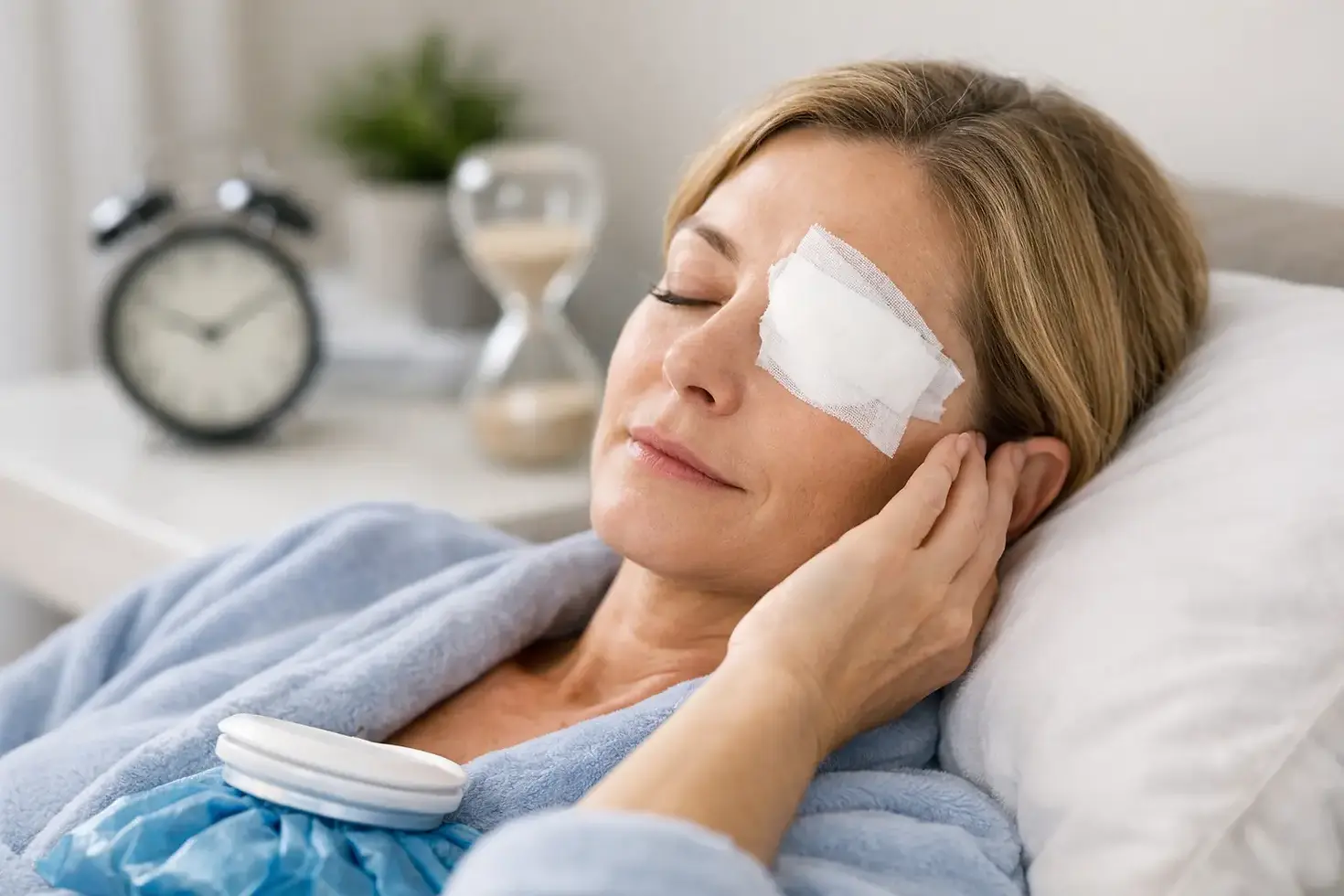
The first week is the most visible part of recovery. Swelling and bruising are expected, often peaking around the second or third day before gradually improving. Your eyes may feel tight, watery, dry, or mildly irritated. Vision can be temporarily blurry from ointment, tearing, or swelling, so patients need someone else to drive them home and should not plan to drive until vision is clear and they are no longer taking prescription pain medication.
By the end of the first week, many patients are comfortable doing light activities at home. If external sutures are used, they are commonly removed around one week after surgery. Bruising may still be noticeable, particularly after lower eyelid surgery, but makeup can often be used once the incisions are adequately healed and your surgeon has cleared it.
During the second week, swelling and discoloration usually improve enough for many people to return to desk work, errands, and low-key social plans. Some patients are ready sooner, while others prefer a little more privacy, especially if they bruise easily or had upper and lower eyelid surgery at the same time.
At three to six weeks, most residual swelling has settled. The eyelids typically look increasingly natural, though the incision lines may remain pink for a period of time. Patients can often resume a broader range of exercise based on their surgeon’s instructions.
At two to three months, the tissues are generally much more refined. Small changes can continue beyond this point, especially after lower eyelid surgery, revision procedures, or surgery involving significant eyelid repositioning. A careful surgeon will discuss the difference between being socially recovered and seeing the final result.
Recovery Varies by Procedure
Upper eyelid blepharoplasty commonly has the most straightforward visible recovery. The incision sits in the natural upper-lid crease, and bruising is often limited to the eyelid and surrounding area. Patients frequently plan for about 10 to 14 days before an important event, though some feel comfortable sooner.
Lower eyelid surgery can require more patience. Under-eye swelling may linger longer because the lower lids and cheek area hold fluid more readily. A conservative approach to lower-lid rejuvenation is especially important: the lower eyelid must be supported properly, not simply tightened or hollowed. The early recovery period can be longer, but careful healing supports a rested result that does not look operated on.
Ptosis repair addresses a different problem: a low upper lid margin that can make the eyes appear sleepy or obstruct vision. Swelling may temporarily make lid height look uneven during early healing. This does not necessarily predict the final position. Follow-up visits allow the surgeon to monitor eyelid height, closure, corneal comfort, and visual function as swelling resolves.
When a brow lift or browpexy is performed with eyelid surgery, recovery may include forehead tightness, scalp tenderness, or additional swelling. In some patients, correcting a low brow rather than removing excessive upper-lid skin is the more anatomically appropriate choice. That distinction protects against an overdone appearance and helps preserve natural expression.
What Affects Your Personal Healing Time?
Your procedure is only one part of the equation. Age, skin quality, medical history, medication use, and the extent of surgery all influence recovery. People who have had prior eyelid surgery or need revision work may have more scar tissue and a less predictable healing course.
Bruising can be more pronounced in patients who use blood-thinning medications, certain supplements, alcohol, or nicotine products. Never stop prescribed medication without direction from the clinician who manages it. Your surgical team will provide individualized instructions about which medications and supplements require adjustment before surgery.
Colorado’s dry climate can also make dry-eye symptoms more noticeable during recovery. Patients with pre-existing dry eye, contact lens use, prior LASIK, thyroid eye disease, or incomplete eyelid closure need a particularly thoughtful preoperative assessment. Because surgery occurs so close to the surface of the eye, eyelid expertise includes evaluating comfort and protection of the cornea, not only the cosmetic appearance of the lids.
What Helps Swelling and Bruising Improve?
The most useful recovery plan is usually simple and consistent. Cold compresses during the early postoperative period can reduce swelling when used as directed. Keeping the head elevated, including while sleeping, helps limit fluid accumulation around the eyes. Rest is beneficial, but short, easy walks can support circulation once you are comfortable.
Avoid strenuous exercise, heavy lifting, bending with the head down, and activities that raise blood pressure until your surgeon clears them. These can worsen swelling or increase bleeding risk early in healing. Swimming, hot tubs, and dusty outdoor activities should also wait until the incisions are healed and your surgeon says it is safe.
Sun protection is not optional after eyelid surgery. Fresh incisions and bruised skin can darken with ultraviolet exposure. Sunglasses, a brimmed hat, and surgeon-approved sun protection help protect the healing skin, particularly for active patients who spend time skiing, hiking, cycling, or enjoying the Front Range outdoors.
When Can You Return to Work, Exercise, and Social Events?
For office-based work, planning 10 to 14 days away is a reasonable starting point. Remote work may be possible earlier for patients who feel well and can take screen breaks, but eye dryness and fatigue can make a full day at a computer uncomfortable during the first week.
Light walking is commonly encouraged early, while more demanding exercise returns in stages. The exact timing depends on the procedure and your healing. A patient having uncomplicated upper eyelid surgery may return to gentle activity sooner than someone recovering from lower-lid surgery, ptosis repair, or a combined brow procedure.
For weddings, professional photos, reunions, or other major events, allow more time than the minimum. Four to six weeks provides a more comfortable margin for most visible bruising and swelling to fade. If the event is especially important, several months is ideal. The eyelids can look good well before then, but planning ahead removes unnecessary pressure from recovery.
What Is Normal, and When Should You Call?
Mild discomfort, swelling, bruising, tearing, light sensitivity, and temporary blurred vision from ointment are common. Symptoms should gradually improve rather than become more severe. It is also common for the two sides to heal at slightly different rates in the early weeks.
Contact your surgical team promptly for increasing pain, sudden vision changes, heavy bleeding, rapidly worsening swelling, fever, thick discharge, or a marked inability to close the eye. These symptoms are uncommon, but surgery around the eye deserves prompt attention when something feels wrong.
At Denver Eyelid Specialists, recovery planning begins before surgery. A detailed eyelid-focused examination helps determine whether concerns arise from excess skin, fat prominence, brow descent, true ptosis, or a combination of factors. That precision supports safer planning and results that look refreshed, never over-tightened.
Give yourself enough time to heal without rushing back into photos, meetings, or strenuous activity. The visible recovery is relatively short for most patients, but thoughtful aftercare and follow-up are what allow a refined eyelid result to settle naturally into your own expression.


Comments