
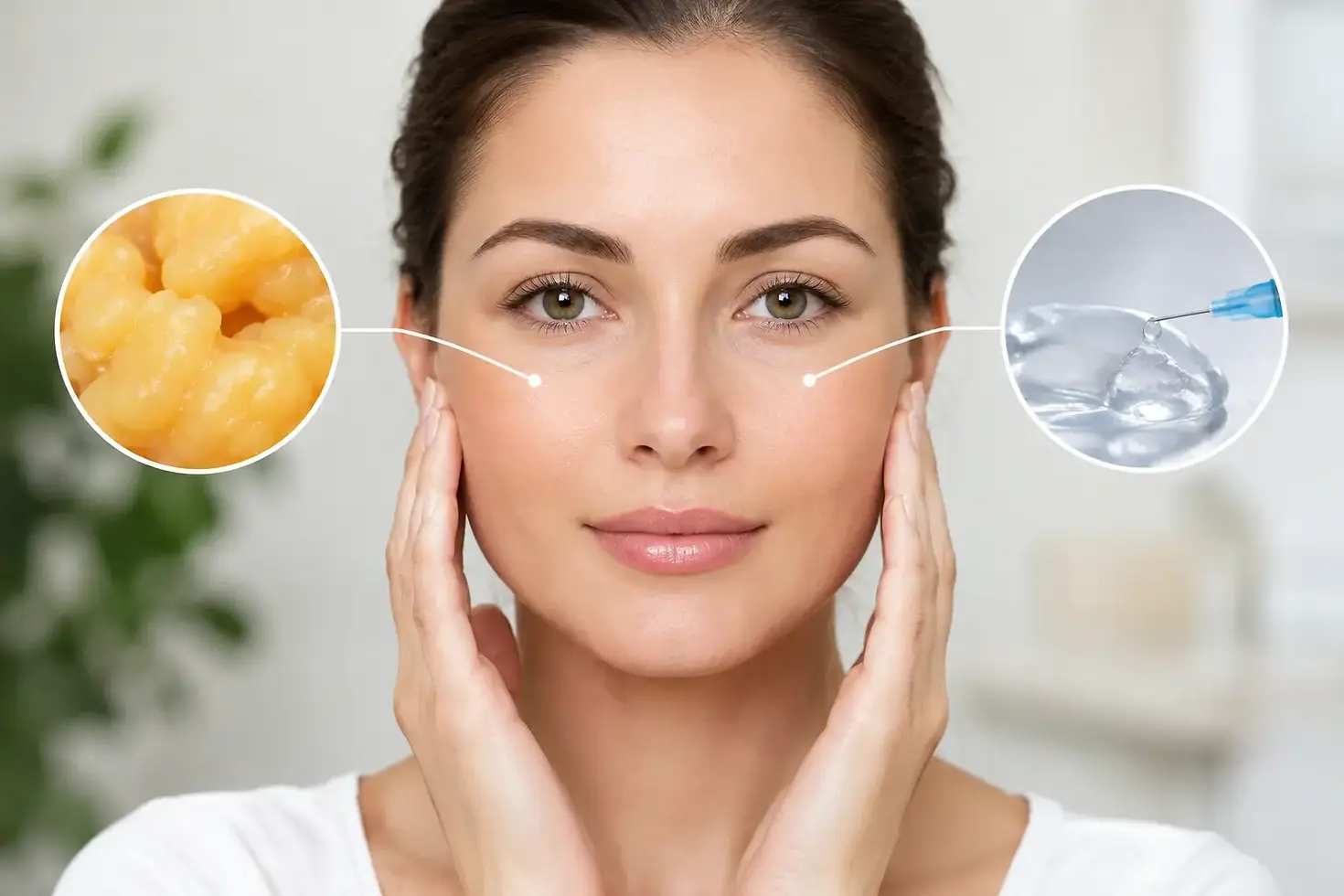
Fat Versus Fillers for Under-Eye Rejuvenation
A hollow beneath the eyes can make a well-rested person look tired, while puffiness can create the same impression for an entirely different anatomical reason. That distinction is central to the decision between fat versus fillers. Both can restore a smoother transition between the lower eyelid and cheek, but they do not treat the same concern, carry the same risks, or offer the same longevity.
For the delicate area around the eyes, the best choice is rarely about choosing the longest-lasting option or the least invasive one in isolation. It is about identifying what is creating the appearance: lost volume, prominent fat pockets, skin laxity, cheek descent, a low brow, or a combination of these changes. An eyelid-focused evaluation helps match treatment to anatomy while protecting the natural expression that makes a face recognizable.
Fat Versus Fillers: The Fundamental Difference
Dermal fillers are typically hyaluronic acid gels placed beneath the skin to support areas of volume loss. In carefully selected patients, a small amount of filler can soften a tear-trough hollow or improve the contour where the lower eyelid meets the upper cheek. Treatment is performed in the office, and improvement is visible quickly.
Fat transfer uses a patient’s own fat, usually collected through gentle liposuction from an area such as the abdomen or thighs. The fat is purified and placed strategically into areas that need volume. It may be performed on its own or as part of lower eyelid surgery, particularly when a patient has both hollowness and under-eye bags.
The difference is not simply temporary filler versus permanent fat. Some filler effects can persist longer than expected in the under-eye area, and not all transferred fat survives. The more meaningful difference is how each option behaves in thin eyelid tissues and whether it addresses the actual source of an aging or tired appearance.
When Under-Eye Filler May Be Appropriate
Filler can be a reasonable option for a person with a mild to moderate tear-trough hollow, good lower eyelid tone, and little or no visible puffiness. The ideal candidate typically has relatively smooth skin and a volume deficit rather than prominent fat pads.
A conservative approach matters. Lower eyelid skin is thin, and the tissues are highly visible. Too much filler can make the area look swollen, heavy, or unnatural. Hyaluronic acid filler can also attract water, which may be problematic for people who already wake with puffiness or retain fluid around the eyes.
One advantage of hyaluronic acid filler is that it can be dissolved if necessary. That reversibility is valuable, but it should not be viewed as a reason to take unnecessary risks. Injections around the eye require detailed knowledge of facial vascular anatomy. Though uncommon, vascular complications can be serious, including skin injury and vision-threatening events. Technique, product selection, patient screening, and the ability to recognize and manage complications are essential.
Filler is also not a reliable treatment for true lower eyelid bags. Adding volume below a bulging fat pad can sometimes camouflage a minor contour change, but it can just as easily make the entire area look fuller. If bags are the dominant concern, more filler may move a patient farther from the refined result they want.
When Fat Transfer May Make More Sense
Fat transfer can be especially useful for patients who need broader volume restoration through the upper cheek and lower eyelid junction. Rather than filling a narrow line, fat can be placed in a layered, sculpted way to improve facial balance. It is often considered when volume loss is more substantial or when a patient is already planning lower blepharoplasty.
During lower eyelid rejuvenation, fat may be repositioned rather than removed entirely. This can preserve useful volume while smoothing the transition from eyelid to cheek. In other cases, additional fat grafting may be appropriate to restore support where the face has lost fullness over time.
Because transferred fat is living tissue, the result can be long-lasting once the surviving fat cells establish a blood supply. However, outcomes are less immediately predictable than filler. Some of the transferred fat will be reabsorbed, and the degree of retention varies by person and technique. A touch-up may occasionally be considered after healing.
Fat transfer also involves a procedure and recovery period. Bruising and swelling can last longer than with filler, especially when it is combined with eyelid surgery. For patients seeking a surgical correction of bags, excess skin, or lid laxity, though, combining procedures may offer a more complete and durable improvement than repeated injections alone.
The Under-Eye Problem Must Be Diagnosed First
The word “bags” is often used to describe several different concerns. One person may be seeing protruding orbital fat. Another may have a deep tear trough that creates a shadow. Someone else may have loose skin, swelling related to allergies or fluid retention, or a low cheek that has changed the contour beneath the lid.
This is why a photograph or quick glance is not always enough to determine treatment. A careful examination evaluates lower eyelid position, skin quality, fat prominence, cheek volume, asymmetry, prior filler, and signs of dry eye or eyelid laxity. The health and function of the eye matter just as much as the cosmetic plan.
For example, a patient with significant lower lid laxity may need lid support as part of surgery. A patient with chronic morning swelling may not be an ideal filler candidate, even if a hollow is visible. A person with previous filler that has migrated or remained in the tissue may need a different plan altogether.
Why Surgery Can Be Better for Bags and Loose Skin
Lower blepharoplasty is designed to address structural concerns that filler cannot correct. Depending on the patient’s anatomy, surgery can reposition or conservatively remove protruding fat, tighten lax tissues, and address excess skin. The goal is not to hollow the lower eyelid or create an over-tightened appearance. It is to create a smoother, rested contour while preserving normal eyelid function and expression.
For some patients, a surgical plan includes fat repositioning without added fat grafting. For others, subtle fat grafting to the cheek may complement the correction of bags. Still others may be best served by nonsurgical treatment or by treating the midface rather than the eyelid itself.
A specialized approach is particularly valuable in revision cases. Patients who have had aggressive fat removal in the past may develop a hollow or skeletal appearance under the eyes. Correcting that contour requires thoughtful volume restoration and careful respect for the lower eyelid’s support structures.
Longevity, Recovery, and Cost Considerations
Filler generally involves little downtime, although bruising and swelling are possible. Its visible effect may last months to more than a year, depending on the product, placement, metabolism, and the individual patient. Repeat treatment is usually needed to maintain the result.
Fat transfer involves more initial recovery and has greater upfront complexity. Once healed, the retained fat can provide long-term volume support, but it will continue to age naturally with the rest of the face. Weight changes may also affect grafted fat, just as they affect fat elsewhere in the body.
Cost should be considered in the context of the treatment plan, not only the initial appointment. Repeated filler may be appropriate and worthwhile for a mild hollow. But when someone has significant bags, skin laxity, and volume loss, repeated injections can become more expensive over time while still failing to address the underlying anatomy.
Choosing a Conservative, Eye-Safe Plan
The lower eyelid is not a place for a one-size-fits-all solution. A conservative plan often produces the most natural result: enough volume to soften a shadow, enough surgical correction to address bags when needed, and no unnecessary treatment that adds heaviness around the eyes.
At Denver Eyelid Specialists, the evaluation centers on eyelid anatomy, eye health, facial balance, and the result a patient hopes to see in the mirror. The right treatment should leave you looking rested and like yourself, not filled, tightened, or visibly operated on.
If you are deciding between fat and filler, begin with the question beneath the question: what is actually causing the tired appearance? Once that answer is clear, the path to a refined, natural-looking result becomes much easier to choose.


Comments