
The Eyelids as a Marker for Aging: A Deeper Look
- Chris Thiagarajah MD
- May 18
- 3 min read
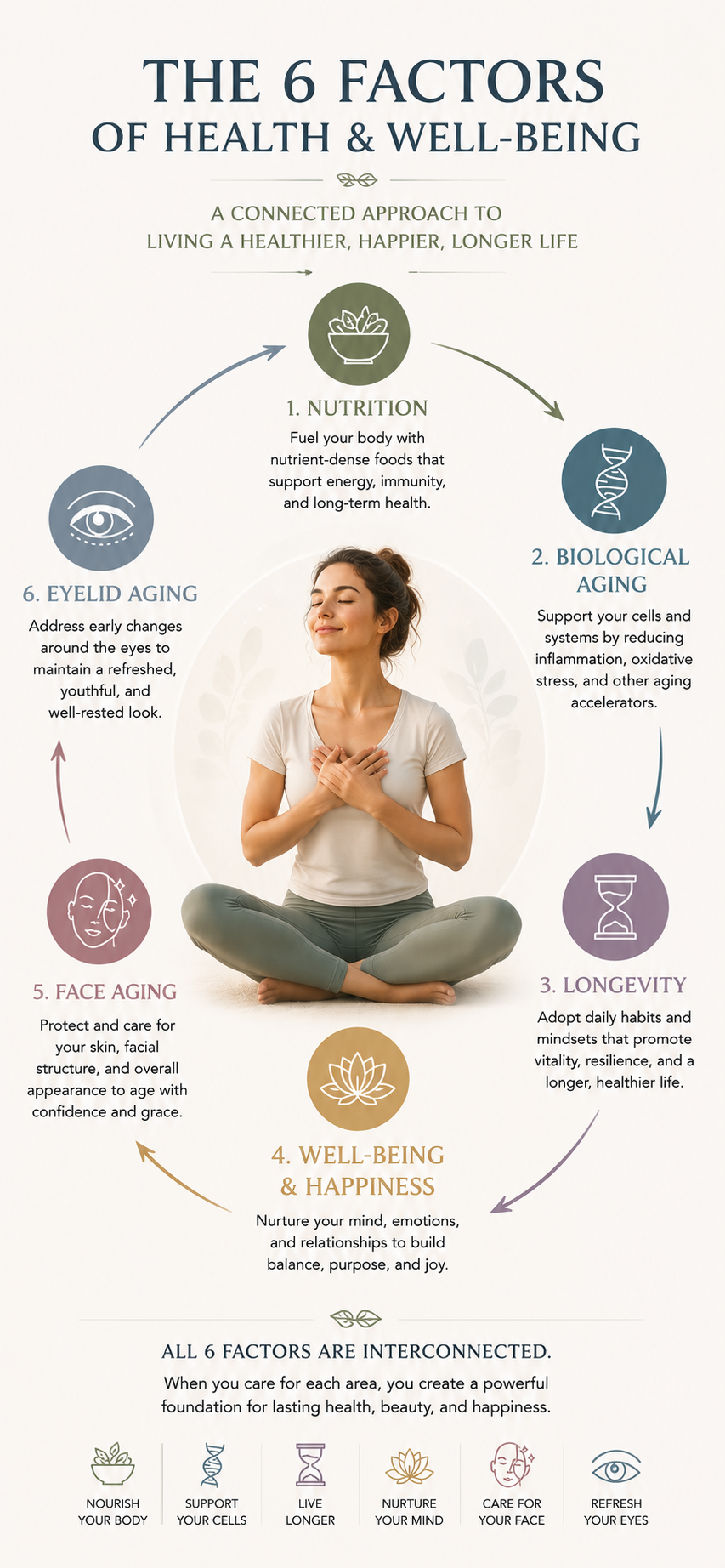
The eyelids are among the most delicate and expressive structures in the human body, and they are often one of the earliest places where aging becomes visible. The skin of the eyelids is among the thinnest in the body and is subjected to constant motion through blinking, facial expression, eye movement, and environmental exposure. Humans blink thousands of times each day, creating repetitive mechanical stress over decades. As collagen and elastin gradually decline with age, the eyelids begin to demonstrate characteristic changes such as excess skin, hollowing, puffiness, fat prolapse, laxity, and wrinkling. Scientific studies have shown that these changes are not isolated phenomena, but rather part of a broader process involving skin aging, facial aging, and systemic biological aging.
Research in dermatology has demonstrated that intrinsic aging and ultraviolet exposure contribute to progressive collagen fragmentation, elastin degeneration, oxidative stress, and chronic low-grade inflammation within the skin. Because eyelid skin is exceptionally thin and mobile, these aging processes often become apparent in the periocular region before they are seen elsewhere in the face. Studies evaluating facial aging have shown that changes around the eyes strongly influence how age, fatigue, attractiveness, vitality, and even emotional expression are perceived. In many ways, the eyelids act as an external reflection of deeper biological processes occurring throughout the body.
Modern anatomical research has also shown that facial aging extends beyond the skin alone. Aging involves changes in the underlying facial skeleton, retaining ligaments, fat compartments, connective tissues, and musculature. Over time, bone remodeling, ligament laxity, and soft tissue descent alter the appearance of the face, contributing to brow descent, lower eyelid bags, hollowing, and changes in facial contour. These changes are interconnected, and the periocular region frequently serves as one of the first visible indicators of these broader structural transformations.
Interestingly, scientific literature increasingly supports the idea that perceived facial age may correlate with biological age and overall health status. Multiple studies have demonstrated that individuals who appear older than their chronological age may have higher rates of systemic disease, inflammation, frailty, cardiovascular disease, and even increased mortality risk. Researchers have proposed that perceived age may function as a clinically useful biomarker of aging because the face reflects cumulative effects of genetics, metabolism, environmental exposure, stress, and lifestyle. The eyes and eyelids, because of their central role in communication and expression, may be especially sensitive indicators of these processes.
Lifestyle factors also play a significant role in periocular aging. Sleep deprivation, chronic stress, smoking, poor nutrition, ultraviolet exposure, and systemic inflammation can accelerate visible aging around the eyes. Conversely, improved sleep, exercise, nutrition, hydration, and stress management may positively influence skin quality, facial vitality, and overall appearance. Research increasingly demonstrates that wellness and appearance are deeply interconnected systems rather than separate entities. The periocular region often reflects overall well-being, energy, and physiologic resilience before other body systems visibly reveal decline.
This connection between eyelid aging and overall wellness has led to a broader modern understanding of facial rejuvenation. Eyelid surgery, lasers, skincare, regenerative medicine, injectables, and other aesthetic treatments are increasingly viewed not solely as cosmetic interventions, but as components of a larger philosophy focused on healthy aging, vitality, confidence, and quality of life. Longevity science now recognizes that aging successfully is not simply about increasing lifespan, but also about preserving function, resilience, emotional well-being, social connection, and self-confidence.
The eyes occupy a unique role in human communication. They convey emotion, attention, energy, fatigue, empathy, and health. Small changes around the eyelids may dramatically alter how an individual is perceived both socially and professionally. As a result, rejuvenation of the periocular region may have effects that extend beyond appearance alone, influencing confidence, emotional well-being, and quality of life.
Ultimately, the eyelids may serve as one of the body’s most visible markers of aging because they exist at the intersection of skin biology, facial anatomy, systemic health, and emotional expression. Understanding eyelid aging through this broader lens allows aesthetic medicine to move beyond isolated cosmetic correction toward a more comprehensive perspective that integrates wellness, biological aging, longevity, and human well-being.
Selected Scientific References
Uitto J. The role of elastin and collagen in cutaneous aging. Intrinsic ageing of the skin. PubMed PMID: 18404866.
Swift A, et al. The Facial Aging Process From the “Inside Out.” Facial Plastic Surgery Clinics of North America. PMC8438644.
Christensen K, et al. Perceived age as clinically useful biomarker of ageing. BMJ. PubMed PMID: 20008378.
Shaw RB Jr, et al. Aging of the facial skeleton: aesthetic implications and rejuvenation strategies. PubMed PMID: 20871486.
Recent reviews on periorbital aging and facial aging anatomy available through PubMed Central and the NIH database.

Comments