

DENVER EYELID SPECIALISTS
Upper Blepharoplasty (Upper Eyelid Lift) in Denver
Upper Eyelid Lift for Heavy, Hooded Eyelids
Paragraph: Upper blepharoplasty, also called an upper eyelid lift, removes extra skin (and sometimes a small amount of fat) from the upper eyelids. It softens a heavy, hooded look and, when skin hangs over the lashes, can open up your upper field of vision. Dr. Chris Thiagarajah performs conservative upper eyelid lifts in Denver, so you look rested, not "done." For an overview of every option, see our guide to blepharoplasty in Denver.


About 45 Minutes
Procedure Time

Local Anesthesia
Comfortable and Safe

In Office Option
For many patients

7-10 Days
Initial Recovery

Natural
Individualized Plan
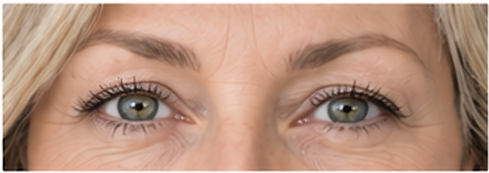
What Upper Blepharoplasty Does
-
Removes heavy, hooded upper-lid skin
-
About 45 minutes, often done in the office
-
Hidden incision in the natural eyelid crease
-
Most people are back to normal activities in 1-2 weeks
A measured pinch of extra upper lid skin is removed, and fat is gently sculpted only if needed. The incision sits in your natural eyelid crease and usually fades to a fine line.
It treats:
-
Extra, hooded upper lid skin
-
Puffiness from fat in the upper lids
-
Skin that blocks your side or upper vision
It won't fix on its own:
-
A droopy lid edge (that's ptosis repair)
-
Low eyebrows (that's a brow lift)
-
Crow's feet (usually treated with Botox)

Watch: What Upper Blepharoplasty Does
Loose Skin, Ptosis, or a Low Brow?
Not every heavy upper lid is extra skin. The right fix depends on whether the cause is skin, the lid muscle, or the brow.

Excess Skin
Extra skin folds over the lid crease. Upper blepharoplasty removes it.

True Ptosis
The lid itself sits low because the lifting muscle has stretched. That needs ptosis repair, which can be combined.

Brow Descent
A drooping brow pushes skin onto the lid. A brow lift may be the better fix.
DENVER EYELID SPECIALISTS
Upper Blepharoplasty in Denver
Heavy, hooded upper lids can make you look tired when you feel fine. Dr. Chris Thiagarajah, MD, FACS, a board-certified, ASOPRS fellowship-trained oculoplastic surgeon, performs upper blepharoplasty, also called an eyelid lift, removing just the right amount of skin so you look rested, not different.
Chris Thiagarajah, MD · Board-certified ophthalmologist
ASOPRS fellowship-trained oculoplastic surgeon
12,000+
Eyelid procedures performed
10x
5280 Top Doctor (2017-2026)
ASOPRS
Fellowship Trained

Dr. Thiagarajah's Technique
Every plan is built from your anatomy, not a template.
1. Mark the crease with you sitting up, matched on both sides.
2. Measure the skin with a gentle pinch test.
3. Numb the lids with a local injection, for every patient.
4. Remove skin, sculpt fat only if needed. Too much fat removal looks hollow and older.
5. Close with fine sutures hidden in the crease.
"I'm conservative with skin," he says. "More can be taken later, but too much is hard to undo." The surgery takes about 45 minutes, and your eyes are not patched.
Benefits of Upper Eyelid Surgery
Hooding
Reduces excess skin that creates a hooded effect
Heavy or Tired Appearance
You look more awake and refreshed
Reduced Eyelid Show
Restores a more visible eyelid crease, eyelid platform and visible upper eyelid.
Makeup Difficulty
Makes it easier to apply eye makeup and can improve peripheral vision in certain functional cases


Risks and Eye Surface Safety
As with any surgery, there are risks. These can include temporary dryness, irritation, bruising, asymmetry, visible scars, infection, bleeding, and, rarely, changes in vision.
A thorough eye-surface evaluation is performed to minimize risk and support healing. Oculoplastic Surgeons are trained to evaluate you to reduce those risks as much as possible
Upper Blepharoplasty Cost
Cosmetic upper blepharoplasty performed in the office under local anesthesia is approximately $3,550 for both eyes. Your personalized surgical plan and exact cost will be reviewed during your consultation. Prefer to stay awake? Learn about in-office upper blepharoplasty. The $200 cosmetic consultation fee is applied toward your surgery if you schedule it within one year of your consultation.
When drooping eyelids significantly interfere with vision, insurance may cover part of the procedure if specific examination, photography, and visual-field requirements are met. Cosmetic surgery is not covered by insurance.
Cosmetic or Functional?
Upper blepharoplasty may be cosmetic, functional, or a combination of both. Cosmetic surgery is performed primarily to improve appearance, while functional surgery addresses eyelid skin or ptosis that significantly interferes with vision.
Insurance coverage depends on your examination, photographs, visual-field testing, symptoms, and the specific requirements of your insurance plan. Not everyone with heavy upper eyelids will meet the criteria for functional coverage.

Why Denver patients choose Dr Thiagarajah
Dr. Chris Thiagarajah is a board-certified ophthalmologist and ASOPRS fellowship-trained oculoplastic surgeon with experience performing more than 12,000 eyelid procedures. He is known for a conservative, natural-results philosophy and is proud to care for patients in Greenwood Village, the Denver Tech Center, and throughout the Denver area.
✓ Board-certified
✓ ASOPRS fellowship-trained oculoplastic surgeon
✓ More than 12,000 eyelid procedures
✓ Conservative, natural-looking results
✓ Convenient Greenwood Village / DTC location
Upper Blepharoplasty Recovery
Day 0-2
Mild swelling bruising and tightness. Rest and keep head elevated
Day 3-5
swelling and bruising begin to improve
Day 6-7
Most people can begin to return to function
Week 3
Patients start returning to social functions with friends and family
Month 3
Swelling and bruising almost gone. Most patients feel healed


Upper Blepharoplasty FAQ
Candidacy and planning
Am I a Candidate for Upper Blepharoplasty?
Below are the basic criteria for upper eyelid blepharoplasty. As one can imagine analysis for candidacy can only be confirmed with an in office assessment.
Healthy adults noticing excess upper-lid skin or asymmetry
Stable eye surface/tear film (dry eye managed)
Realistic goals: “more awake, same me”
No prior issues with blinking or closure
Men and women—planned differently to respect masculine vs feminine aesthetics (lower crease & preserved fullness in men)
How Dr. Thiagarajah plans your upper eyelid blepharoplasty
Crease mapping: personalized crease height to match your anatomy and gender goals
Skin pinch test: confirms exactly how much to remove—conservative by default
Fat preservation: contour medial fat only if needed; avoid hollowing
Brow analysis: separates true dermatochalasis from brow ptosis to avoid over-resection
Determines if other procedures like ptosis repair or lower eyelid blepharoplasty may be helpful
How do I know if I need a brow lift or an upper bleph?
If your brows sit at or below the rim and lift upward when you raise the skin, brow support may help. If the crease is buried by extra skin but brow position is good, upper bleph is usually the answer. Many patients benefit from a conservative upper bleph alone. Read more about eyebrow lifting here.
The procedure
The procedure (step by step)
Marking & photos in the upright position
Comfort Anesthesia (local +/- light sedation)
Incision in the natural crease
Precision skin excision
Limited muscle/fat contouring as indicated
Fine suture closure to support a smooth crease
Cold compress and aftercare review before you head home
Where is the incision for upper blepharoplasty?
The incision is placed in the natural crease of the upper eyelid, so when your eyes are open, it sits inside the fold. As it heals, it usually fades to a fine line that is hard to see. Dr. Thiagarajah measures your crease before surgery so both sides match and your eyes keep their natural shape.
Does upper blepharoplasty remove fat as well as skin?
Sometimes. Many upper eyelids need mainly skin removal. When a fat pad is bulging, usually near the nose, a small amount of fat may be removed or sculpted. Taking out too much fat can make the upper lid look hollow and older. That's why Dr. Thiagarajah removes only as much as you need for a natural, rested look.
Results and recovery
Will my eyes look different?
You should look like you, just rested. We avoid high creases or excessive fat removal that can feminize or hollow.
Is there a visible scar?The incision sits in the natural crease and generally heals to a thin line that’s hard to see with eyes open.
What about dry eye?
We screen and optimize your tear film. Most patients do well with lubricating drops; symptoms typically improve as swelling resolves.
When can I work out?
Light walking right away; sweat/strain activities after your first follow-up unless advised otherwise
Read about Lower Blepharoplasty
Look at Before and After Photos
Schedule a Consultation
Medically reviewed by Chris Thiagarajah, MD (ASOPRS) —
Oculoplastic Surgeon, Denver Eyelid Specialists.
Published: updated regularly • Last reviewed: 11/17/2026
When are stitches removed after upper blepharoplasty?
Stitches are removed 6 to 8 days after upper blepharoplasty.
Insurance and where it's done
When does Insurance cover upper eyelid Blepharoplasty?
For insurance, the single most important metric is MRD1 (margin–reflex distance 1). When the MRD1 is 2 mm or less, the upper lid sits low enough to encroach on the pupil and functionally reduce the superior visual field—often meeting medical-necessity criteria. Visual-field testing (with taped vs. untaped improvement) and standardized photos usually support the case, but MRD1 drives the decision for most payers.
At Denver Eyelid Specialists, Dr. Chris Thiagarajah precisely measures MRD1, documents symptoms and visual fields, and submits the required photos so eligible functional blepharoplasty can be considered for insurance coverage in the Denver area. He doesn't waste your time with ancilliary testing and expenses if you aren't a candidate in the first-place.
Where can I get upper blepharoplasty in Greenwood Village?
Denver Eyelid Specialists performs upper blepharoplasty at 8301 E Prentice Ave, Suite 403, in Greenwood Village, in the Denver Tech Center. Dr. Chris Thiagarajah is an ASOPRS fellowship-trained oculoplastic surgeon. Depending on your needs, he operates in the office under local anesthesia or at a Denver surgery center. Call or text (720) 386-1989 to book.